
Automatic lubrication is the controlled supply of lubricant to one or more lubrication points at predefined intervals or continuously. It enables bearings, chains, linear guides and other machine components to receive the required amount of grease or oil, often during operation, helping to reduce wear, unplanned downtime and manual maintenance effort.
Correctly specified automatic lubrication systems support equipment reliability, improve maintenance efficiency and contribute to more consistent lubrication across industrial machinery and plants.
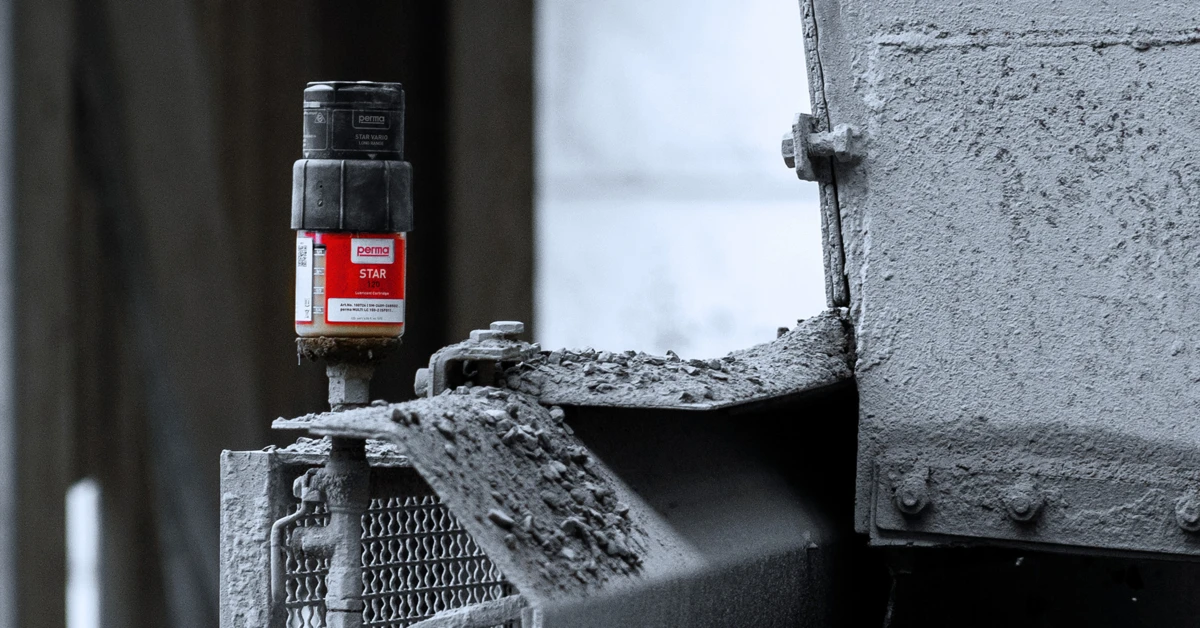
What is automatic lubrication and how does it work?
Automatic lubrication replaces recurring manual lubricant dispensing with a technical system that supplies the required amount of lubricant at defined intervals. The lubricant is delivered directly to the lubrication point or through a connected lubrication line.
The objective is to provide the right lubricant, in the right quantity, at the right time.
How automatic lubrication systems work
Depending on their design, automatic lubrication systems consist of a lubricant reservoir, a drive mechanism and one or more lubricant outlets. Electrochemical or electromechanical drive technologies generate the pressure required to deliver the lubricant.
The lubricant is dispensed in small, defined quantities over a specified period. Systems can be mounted directly on the lubrication point or remotely using a lubrication line.
Reliable lubricant delivery requires the system to be matched to the lubricant demand, operating temperature, back pressure, installation conditions and required dispensing period.
Manual vs automatic lubrication
Manual lubrication requires maintenance personnel to access individual lubrication points at scheduled intervals. Variations in lubricant quantities, missed intervals and restricted accessibility can increase the risk of over- or underlubrication.
Automatic lubrication provides a more consistent and controlled lubricant supply.
| Criterion | Manual lubrication | Automatic lubrication |
| Lubricant dispensing | Manually applied quantities | Defined, controlled quantities |
| Lubrication intervals | Dependent on maintenance schedules | Predefined or controlled intervals |
| Machine operation | May require interruptions | Often possible during operation |
| Accessibility | Regular access to lubrication points required | Remote mounting possible |
| Maintenance effort | Recurring manual lubrication tasks | Reduced routine lubrication tasks |
| Monitoring | Primarily manual inspections | Digital monitoring possible, depending on the system |
Automatic lubrication does not eliminate the need for maintenance. Regular inspections, correct system settings and timely replacement or refilling remain essential.
Benefits of automatic lubrication in industrial maintenance
Automatic lubrication offers technical, operational and economic benefits, particularly in industrial plants with numerous, widely distributed or difficult-to-access lubrication points.
Improved equipment reliability
and reduced wear
A consistent lubricant supply helps maintain an effective lubricating
film between moving components, reducing friction and wear.
Controlled relubrication reduces the risk of lubricant starvation and excessive lubricant supply. This can help prevent lubrication-related component failures, extend component service life and improve equipment availability.
Reduced maintenance effort
and improved planning
Automatic lubrication reduces the number of recurring manual lubrication tasks and maintenance routes. With the growing shortage of skilled maintenance personnel, automating routine lubrication tasks is becoming increasingly important for industrial maintenance teams.
Defined dispensing periods and replacement intervals make maintenance activities easier to schedule, allowing maintenance personnel to focus on inspections, fault analysis and other reliability-related tasks.
Connected lubrication systems further improve maintenance efficiency by enabling remote status monitoring, centralised lubrication point management and more targeted maintenance activities.
Improved occupational safety
Lubrication points are frequently located at height, behind protective guards or close to moving machine components.
Automatic lubrication systems can supply these points from a more accessible mounting position via lubrication lines, reducing the need for personnel to enter potentially hazardous areas for routine lubrication tasks. Machine-specific risk assessments and applicable safety procedures must always be observed.
Controlled lubricant consumption
and resource efficiency
Correctly configured automatic lubrication systems dispense lubricant according to the requirements of the application.
This helps reduce unnecessary lubricant consumption, minimise excess lubricant escaping from lubrication points and maintain a cleaner machine environment.
Combined with reduced component wear, controlled lubricant consumption supports the efficient use of maintenance resources.
Types of automatic lubrication systems
Automatic lubrication systems differ in the number of lubrication points they supply, their drive technology, lubricant compatibility and control functions.
Single-point and multi-point lubrication systems
| System type | Operating principle | Typical applications |
| Single-point lubrication | Supplies one individual lubrication point with grease or oil | Electric motors, pumps, fans, conveyor bearings |
| Multi-point lubrication | Supplies several lubrication points from a common unit | Machine assemblies with multiple lubrication points |
Single-point lubrication systems allow individual dispensing settings for lubrication points with different requirements. Their decentralised design is particularly suitable for widely distributed lubrication points.
Multi-point lubrication systems supply several lubrication points from a common unit. Depending on the system design, lubrication points can receive equal lubricant quantities or individually defined quantities according to their specific requirements. Line lengths, lubricant consistency, back pressure and individual lubricant demand must be considered when selecting and configuring the system.
Electrochemical or gas-driven lubricators generate dispensing pressure through a controlled chemical reaction. They are typically compact and straightforward to install.
Electromechanical lubricators use a motor-driven mechanism to dispense lubricant. Depending on their design, they can provide higher dispensing pressures and accommodate longer lubrication lines or more advanced control requirements.
The appropriate drive technology depends on the application and its operating conditions.
Automatic grease lubrication is commonly used for rolling bearings, plain bearings and other components that require a suitable lubricating grease. Grease remains at the lubrication point and can provide additional protection against moisture and contamination.
Automatic oil lubrication is particularly suitable for applications such as chains and certain linear guides, where lubricant penetration and distribution are essential.
Lubricant selection must consider the component manufacturer's specifications, operating conditions and compatibility with the automatic lubrication system.
Industrial applications of automatic lubrication
Automatic lubrication can be integrated into new machinery during the design phase or retrofitted to existing industrial equipment.
Typical lubrication points include rolling bearings, plain bearings, chains, linear guides, spindles and open gears.
Bearings, electric motors, pumps and fans
Bearings in rotating equipment are exposed to continuous movement, mechanical loads and varying operating temperatures. Insufficient lubrication can increase friction, operating temperatures and bearing wear. Excessive grease quantities can also lead to increased friction and heat generation.
Automatic lubrication supports controlled relubrication based on bearing dimensions, rotational speed, operating hours and lubricant requirements.
Conveyor systems, chains and open gears
Conveyor systems often contain numerous lubrication points distributed across extensive production areas. Automatic lubrication reduces the need to access individual conveyor bearings for recurring manual lubrication.
In chain lubrication, the lubricant must reach the friction surfaces between pins and bushes. Open gears require a suitable lubricant application method to protect the tooth flanks under operating loads.
Linear guides and other machine components
Linear guides, spindles and other moving machine components require lubricant quantities and relubrication intervals adapted to their individual operating conditions.
Automatic lubrication enables a controlled lubricant supply based on component requirements, movement patterns and installation conditions.
Challenging operating environments
Industrial lubrication points may be exposed to dust, moisture, vibration, extreme temperatures or aggressive media. Low temperatures can increase the flow resistance of lubricating greases, while high temperatures may accelerate lubricant ageing and affect system performance.
Both the lubricant and the automatic lubrication system must therefore be selected according to the actual environmental and operating conditions.
How to choose the right automatic lubrication system
Selecting an automatic lubrication system requires an application-specific assessment. Reservoir capacity and dispensing period alone are not sufficient selection criteria.
The following factors should be considered:
| Selection criterion | Technical considerations |
| Lubrication points | Number, location, accessibility and individual requirements |
| Lubricant | Grease or oil, consistency, viscosity and system compatibility |
| Lubricant quantity | Required dispensing rate, relubrication interval and operating hours |
| Operating conditions | Temperature, loads, speed, vibration and environmental influences |
| Installation | Direct or remote mounting, line length and line diameter |
| Dispensing pressure | Back pressure and lubricant flow resistance |
| Power supply | Independent operation, battery supply or external power supply |
| Monitoring and control | Local operation, machine integration or remote monitoring |
Determining lubricant requirements
The required lubricant quantity depends on the component dimensions, operating conditions, load, speed and operating hours.Component manufacturer specifications and existing lubrication schedules provide the basis for determining the required dispensing rate and system settings.
Considering installation conditions and dispensing pressure
Remote mounting can improve accessibility and simplify system replacement, particularly at difficult-to-reach lubrication points. However, longer lubrication lines, small line diameters, low temperatures and higher lubricant consistency can increase flow resistance. The available dispensing pressure must be sufficient to deliver the lubricant reliably to the lubrication point under actual operating conditions.
Digital monitoring of automatic lubrication systems
Digital technologies extend automatic lubrication by enabling maintenance teams to manage lubrication points and monitor compatible systems centrally.
Depending on the system and communication technology, maintenance personnel can access operating status, dispensing settings, upcoming replacement requirements and system notifications.
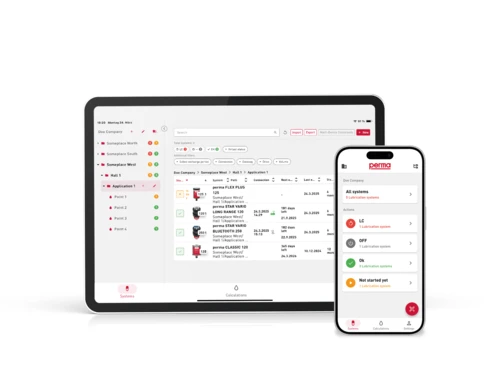
Centralised lubrication point management
Digital platforms such as perma CONNECT enable maintenance teams to centrally manage lubrication points and monitor compatible automatic lubrication systems.
Using the appropriate gateway, maintenance personnel can remotely access system information such as operating status, dispensing settings, upcoming replacement requirements and system notifications – from the office, on site or from any other location.
This reduces the need for manual status checks, supports more efficient maintenance planning and simplifies the management of widely distributed lubrication points.
Integration into preventive and condition-based maintenance
Digital system information supports the timely planning of lubricant replenishment, system replacements and maintenance activities. Maintenance teams can identify system notifications, coordinate maintenance routes and prepare the required replacement systems in advance. When combined with additional machine condition data, automatic lubrication can also form part of condition-based and predictive maintenance strategies.
Digital monitoring complements, but does not replace, correct system selection, installation and regular physical inspections.
Automatic lubrication solutions from perma
For more than 60 years, perma has been developing automatic lubrication solutions for industrial applications and is a global leader in single-point lubrication. Developed, tested and manufactured in Germany, perma automatic lubrication systems are designed for a wide range of industrial applications and operating conditions.
The perma portfolio includes:
- Automatic single-point and multi-point lubrication systems
- Solutions for grease and oil lubrication
- Installation accessories for direct and remote mounting
- Digital solutions for lubrication point management and remote monitoring
- Application-specific consulting, installation support, commissioning and technical training
From individual lubrication points to plant-wide lubrication concepts, perma supports maintenance teams in selecting and implementing suitable automatic lubrication solutions.
Tell us about your machinery and lubrication requirements. Our experts will help you find the right automatic lubrication solution for your application.
Frequently asked questions about automatic lubrication
Automatic lubrication is particularly beneficial for frequently lubricated, difficult-to-access or safety-critical lubrication points, as well as plants with numerous distributed lubrication points. With the growing shortage of skilled maintenance personnel, automating routine lubrication tasks is becoming increasingly important. Connected lubrication systems offer further efficiency gains through remote monitoring, centralised lubrication point management and improved maintenance planning.
A single-point lubrication system supplies one individual lubrication point according to its specific lubricant requirements. A multi-point lubrication system supplies several lubrication points from a common unit, either with equal lubricant quantities or individually defined dispensing quantities, depending on the system design. The appropriate solution depends on the number, location and individual lubricant requirements of the lubrication points.
Depending on their design, automatic lubrication systems can dispense grease, oil or specific lubricant grades. The lubricant must be compatible with both the machine component and the lubrication system. Manufacturer specifications, lubricant consistency, viscosity and operating conditions must be considered before selecting a suitable system.
Automatic lubrication systems can be retrofitted to many existing machines and industrial plants. The feasibility depends on the lubrication point design, lubricant requirements, available installation space and operating conditions. Remote mounting can provide an alternative where direct installation is not possible.
Start by identifying the lubrication points, required lubricant and dispensing quantities. Consider operating temperature, back pressure, lubrication line lengths, mounting conditions, power supply and monitoring requirements. Digital tools such as the integrated calculation assistant in perma CONNECT help determine the precise relubrication quantity and dispensing period and provide application-specific installation recommendations.
Compatible automatic lubrication systems can be monitored remotely using wireless communication technologies and digital platforms such as perma CONNECT. Depending on the system, maintenance teams can access operating status, dispensing settings, upcoming replacement requirements and system notifications from anywhere. This enables centralised lubrication point management, reduces the need for manual status checks and supports more efficient maintenance planning.